liberated frequencies, exhibited at Sónar+D Barcelona 2026
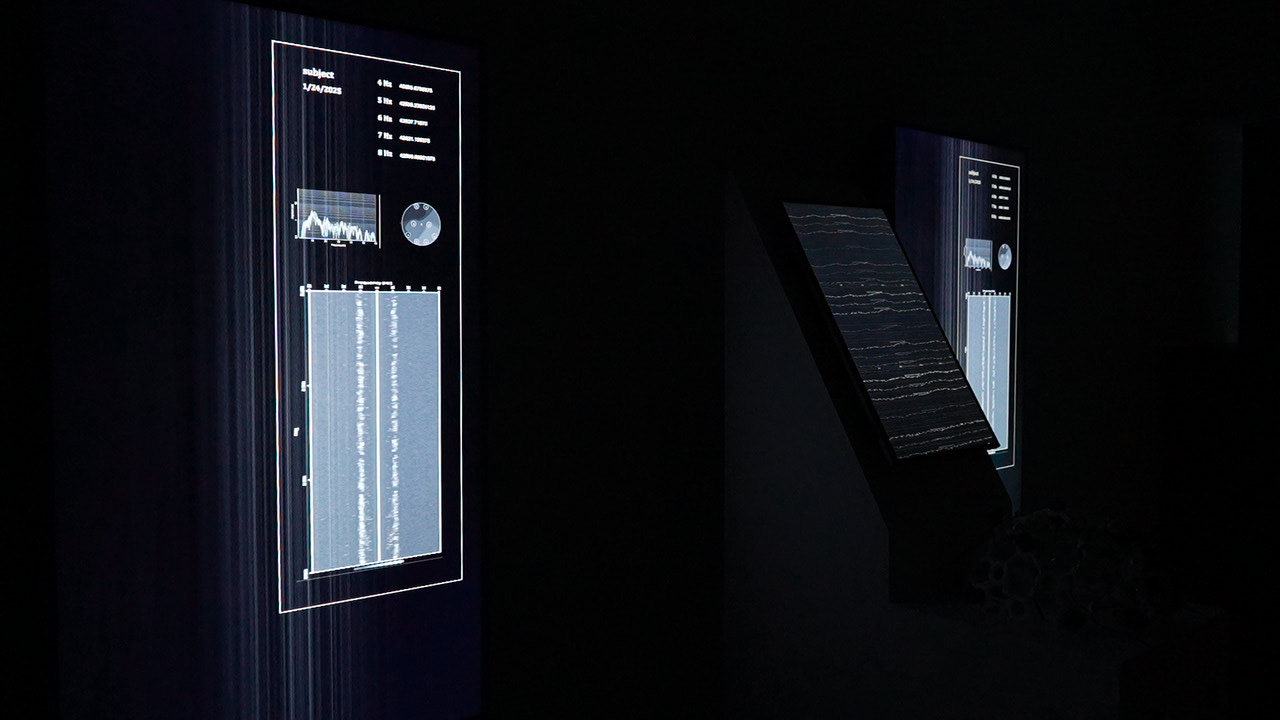
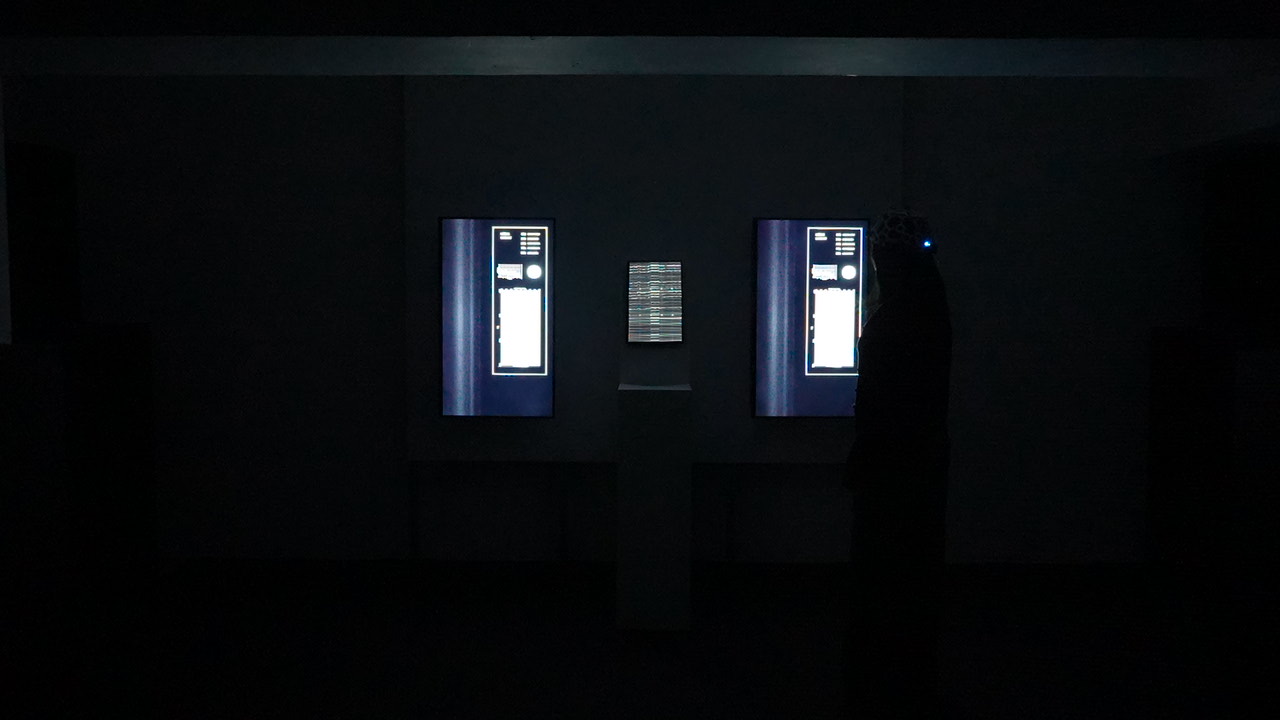
| Concept Our installation, liberated frequencies, explores unprecedented soundscapes that defy our traditional auditory pleasures by "liberating" AI from the limitations of human-defined ‘pleasing'. Before the production, our team conducted field recordings to capture natural sounds, which a subject later rated based on the pleasure they evoked. During the installation, the AI continuously learns in real-time from the highest-rated nature sounds, such as the soothing flow of river streams. Utilizing this sound data, the AI predicts and generates the subsequent auditory experiences, creating an evolving and immersive soundscape. The subject in the soundscape wears EEG sensors that measure real-time theta waves (4-8 Hz) of her brain activity. According to Sammler et al. (2007), increased activity in this frequency band is typically associated with intensified auditory pleasure. However, in response to this heightened brain-based pleasure, the AI—continuously learning from the real-time EEG data—intentionally disrupts the experience. It transforms the generated sounds, subtly altering pitches and waveforms, gradually diverging from the original sound patterns the subject found pleasurable. This deliberate shift invites the viewer to explore the boundaries of discomfort, challenging the conventional auditory aesthetics inherently favored by human perception. Do these deliberately 'liberated' sounds merely traumatize the human senses, or do they open a gateway to new auditory expressions and possibilities? Credits: Artist: Keigo Yoshida Production assistant, narration, text: Rinko Oka Technical Direction: Ryuji Murakawa (arsaffix Inc.) Supported by: Flying Tokyo 2024 with METI and Rhizomatiks Acknowledgements: My heartfelt thanks to Daito Manabe for his guidance and the many thoughtful discussions since the beginning of Flying Tokyo 2024. I am also deeply grateful to Prof. Shinya Fujii for his neuroscientific perspectives and insights. Special respect to the OpenBCI team for their hardware and software, and to the ACIDS team at IRCAM. The neural synthesis in this work is powered by the RAVE model, created by Antoine Caillon and Philippe Esling. |